Gender identity
Androgyne Pride Flag

What does this flag represent?
A person whose gender is a mix of both male and female characteristics.
Colour Palette
Downloads
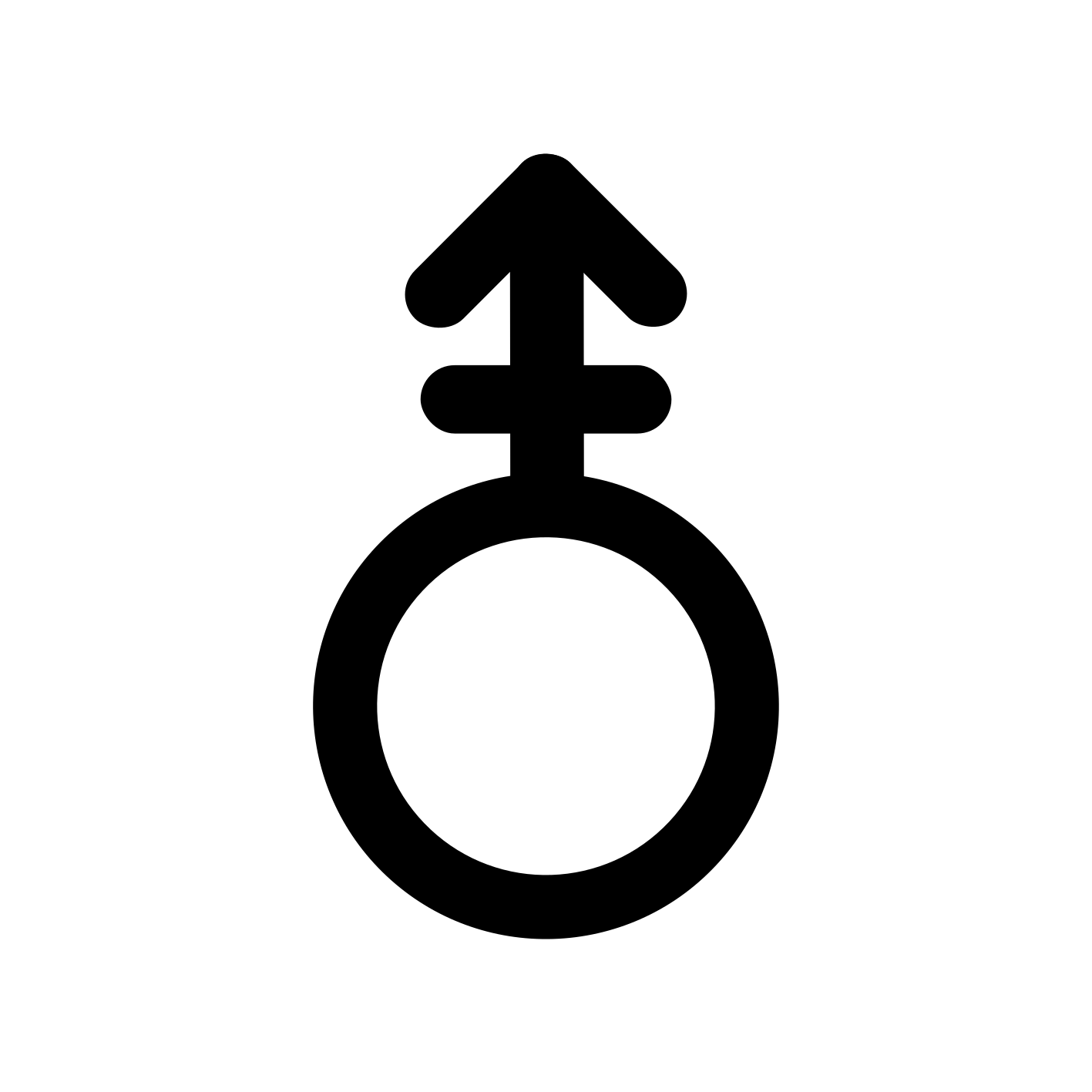
The androgyne glyph is part of the combined Venus/Mars/Mercury family of gender symbols used for androgyny, intersex and gender-diverse meanings.
How to cite or reuse this flag
Source status
Use this page as the guide, then cite the provenance, symbolism and glyph sources listed below.
Attribution
Check source confidence before naming a designer or claiming a single origin story.
Educator use
For educator and inclusion materials, pair the SVG with the meaning, source confidence and context notes.
Design Symbolism
Pink and blue refer to femininity and masculinity, purple marks their blend, and black and white frame the design beyond a simple binary.
Layout: 5 horizontal colour bands, read from top to bottom in the public asset.
- Pink
- Femininity or female-coded experience.
- Purple
- Androgyny, mixture, or overlap.
- Blue
- Masculinity or male-coded experience.
- Black and white
- Contrast, complexity, and space outside fixed binary readings.
Story and Usage Notes
Androgyne individuals embody a blend of both male and female characteristics. This can be in terms of gender identity, expression, or both. Androgynes may feel a balanced mix of masculinity and femininity, or they might experience a unique combination that doesn't fit neatly into traditional categories. The androgyne identity often challenges binary gender norms, emphasiing the fluidity and diversity of gender. Androgynes may present themselves in various ways, and their experiences can be deeply personal and varied. Acknowledging and respecting androgyne identities helps to broaden our understanding of gender beyond binary frameworks.
Timeline Connections
Origin and Provenance
- Introduced
- 2010s; exact flag creator unclear
- Designer / attribution
- Unknown community designer
- Source confidence
- low
Created as a community pride flag for people whose gender blends or moves between masculine and feminine reference points.
The glyph tradition is older and better sourced than the exact flag attribution. The page therefore frames the colour reading as community usage rather than a single official specification.