Romantic orientation
Demiromantic Pride Flag
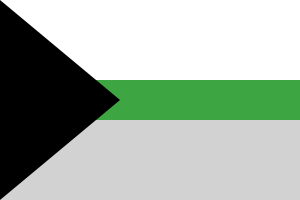
What does this flag represent?
A person who generally experiences romantic attraction only after forming a strong emotional bond.
Colour Palette
Downloads
How to cite or reuse this flag
Source status
Use this page as the guide, then cite the provenance, symbolism and glyph sources listed below.
Attribution
Check source confidence before naming a designer or claiming a single origin story.
Educator use
For educator and inclusion materials, pair the SVG with the meaning, source confidence and context notes.
Design Symbolism
The demiromantic design adapts demisexual flag language with aromantic green, connecting conditional romantic attraction to the wider aromantic spectrum.
Layout: A left black chevron intersects horizontal white, green and grey bands, mirroring demisexual flag structure with aromantic colour language.
- Black chevron
- Aromantic-spectrum connection and the demisexual/demiromantic visual family.
- White
- Platonic or non-romantic relationships.
- Green
- Romantic attraction only under specific conditions within the aro spectrum.
- Grey
- Grey areas between romantic and aromantic experience.
Story and Usage Notes
Demiromantic identity is often placed on the aromantic spectrum. The flag adapts the demisexual layout, replacing purple with green to connect it to aromantic-spectrum symbolism.
Timeline Connections
Origin and Provenance
- Introduced
- 2010s; exact flag origin unclear
- Designer / attribution
- Unknown
- Source confidence
- medium
Used to represent demiromantic people as a distinct romantic-orientation community.
Sources describe demiromantic and grayaromantic flags as counterparts to demisexual/grayasexual flags with green substituted for purple.