Pride flag
Original Gilbert Baker Pride Flag
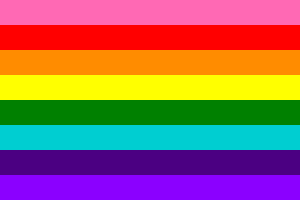
What does this flag represent?
The original eight-stripe rainbow Pride flag created for San Francisco Gay Freedom Day in 1978.
Colour Palette
Downloads
How to cite or reuse this flag
Source status
Use this page as the guide, then cite the provenance, symbolism and glyph sources listed below.
Attribution
Check source confidence before naming a designer or claiming a single origin story.
Educator use
For educator and inclusion materials, pair the SVG with the meaning, source confidence and context notes.
Design Symbolism
Gilbert Baker's original eight-stripe rainbow assigned a value to each colour, making the flag a full civic and spiritual vocabulary for gay liberation.
Layout: Eight equal horizontal stripes, a deliberate rainbow-like field rather than a literal natural rainbow.
- Hot pink
- Sexuality.
- Red
- Life.
- Orange
- Healing.
- Yellow
- Sunlight.
- Green
- Nature.
- Turquoise
- Art and magic.
- Indigo
- Harmony.
- Violet
- Spirit.
Story and Usage Notes
The Original Gilbert Baker Pride Flag was first raised in San Francisco on 25 June 1978. Baker created it with volunteers and friends as a visible symbol of gay liberation, pride and community presence. Its eight stripes carried specific meanings: hot pink for sexuality, red for life, orange for healing, yellow for sunlight, green for nature, turquoise for art and magic, indigo for harmony or serenity, and violet for spirit.
Timeline Connections
Origin and Provenance
- Introduced
- 1978
- Designer / attribution
- Gilbert Baker, with Lynn Segerblom, James McNamara and volunteers
- Source confidence
- high
Created for San Francisco Gay Freedom Day as a new symbol of gay pride, liberation and collective visibility.
The GLBT Historical Society records two original eight-colour flags first raised at United Nations Plaza on 25 June 1978.