Pride flag
Six-Colour Rainbow Pride Flag
What does this flag represent?
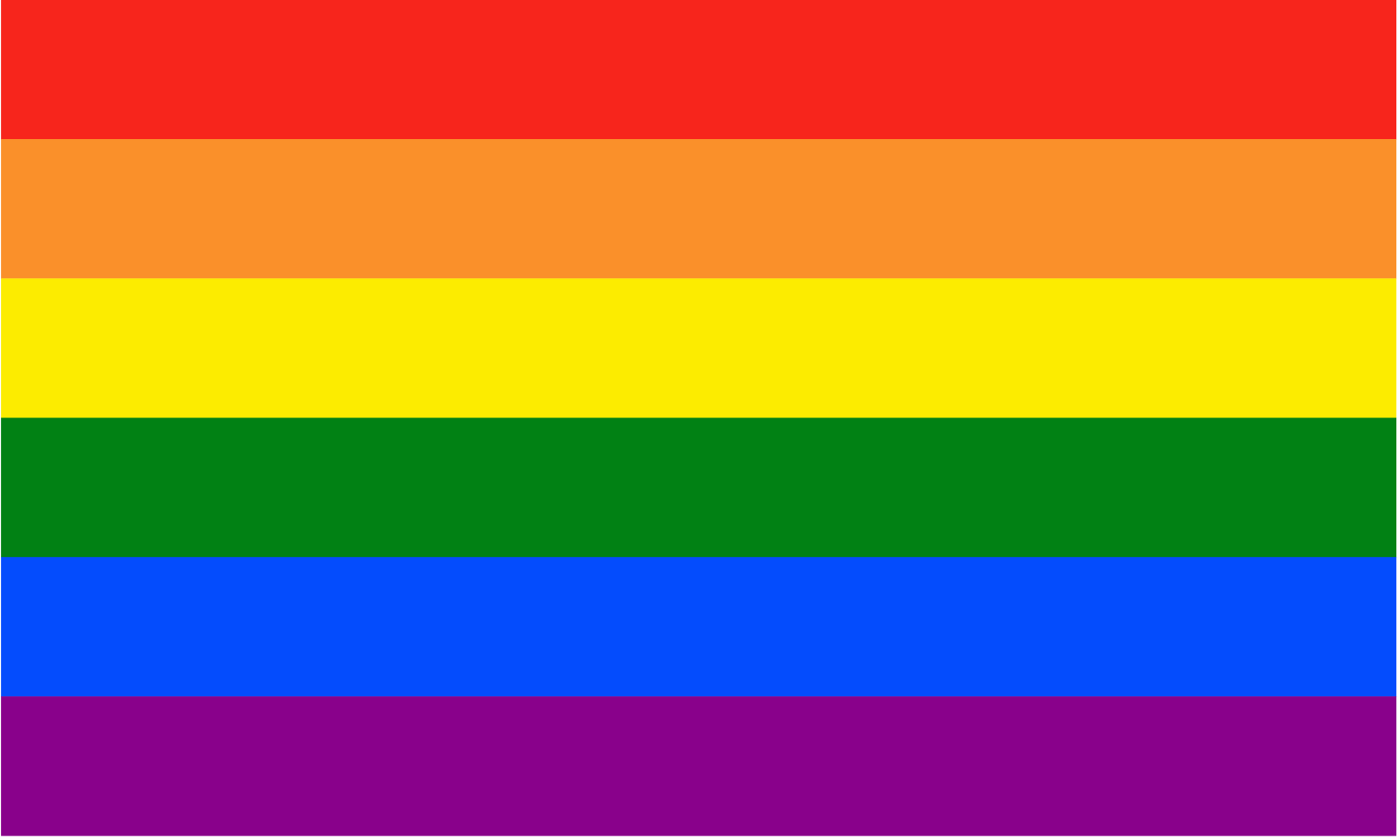
The widely recognised six-stripe Rainbow Pride flag standardised from 1979 after hot pink and turquoise were removed.
Colour Palette
Downloads
How to cite or reuse this flag
Source status
Use this page as the guide, then cite the provenance, symbolism and glyph sources listed below.
Attribution
Check source confidence before naming a designer or claiming a single origin story.
Educator use
For educator and inclusion materials, pair the SVG with the meaning, source confidence and context notes.
Design Symbolism
The six-colour rainbow keeps Baker's broad values while reflecting the production-driven 1979 simplification that became globally recognised.
Layout: Six equal horizontal stripes, normally flown red at the top and violet at the bottom.
- Red
- Life.
- Orange
- Healing.
- Yellow
- Sunlight.
- Green
- Nature.
- Blue
- Harmony or peace, after turquoise and indigo were simplified.
- Violet
- Spirit.
Story and Usage Notes
The Six-Colour Rainbow Pride Flag evolved from Gilbert Baker's 1978 design. Hot pink was dropped when suitable fabric was hard to source, and turquoise was later removed so the flag could be split evenly on San Francisco streetlamps for the 1979 Gay Freedom Day parade. The red, orange, yellow, green, blue and violet version became the most common global Pride flag.
Timeline Connections
Origin and Provenance
- Introduced
- 1979
- Designer / attribution
- Gilbert Baker, adapted from the 1978 rainbow flag
- Source confidence
- high
Standardised the rainbow Pride flag into a practical six-stripe form that became globally recognisable.
Hot pink was dropped because fabric was unavailable; turquoise was removed to create an even number of stripes for streetlamp display.